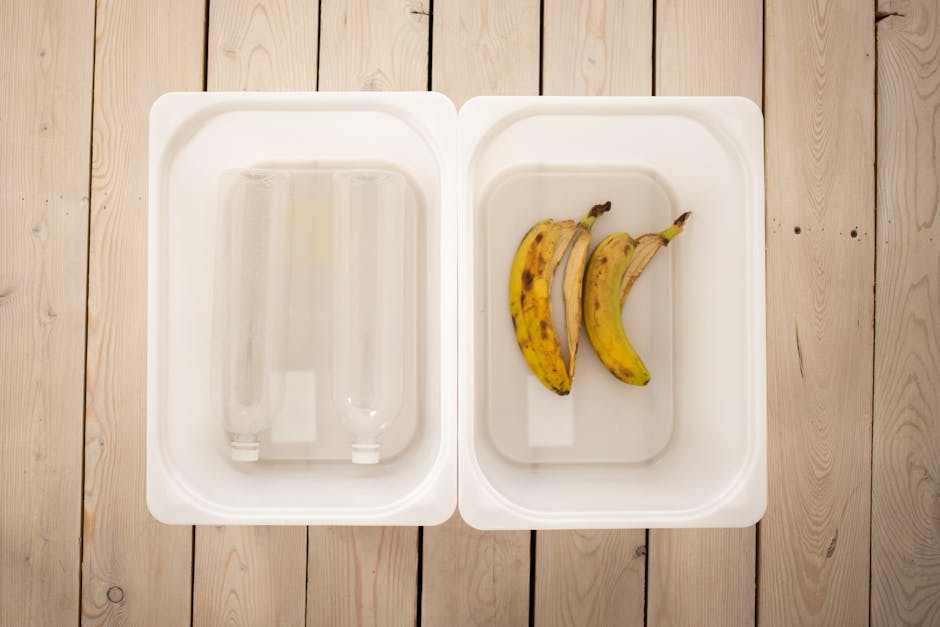
Household sorting guide to maximise recycling and composting
If your kitchen, utility area, or communal bin store has ever turned into a bit of a guessing game, you are not alone. Most households want to recycle more and waste less, but the real challenge is sorting things properly day after day. This guide to maximise recycling and composting shows you how to separate everyday waste with confidence, reduce contamination, and make your bins work much harder for you.
Whether you live in a flat, a house share, a family home, or you are simply trying to cut down on general waste, better sorting habits can make a noticeable difference. It is less about perfection and more about creating a system that is simple enough to stick with. Done well, it saves time, improves recycling quality, and keeps food scraps out of the wrong bin. If you need extra support with larger clear-outs, you can also explore home clearance services or review the company's wider approach to recycling and sustainability.
Expert summary: the best household sorting system is the one you can follow without thinking too hard. Keep it visible, keep it consistent, and keep recycling streams clean enough that your council or waste contractor can actually process them effectively.
Why household sorting matters
Recycling and composting only work properly when the right materials go into the right stream. That sounds obvious, yet contamination is one of the main reasons good material gets downgraded or rejected. A stray plastic bag in a food waste caddy, greasy cardboard mixed with clean paper, or a broken glass in the wrong container can all interrupt the process.
For a household, sorting is not just about being environmentally responsible. It is also about making waste removal simpler, lighter, and less frequent. The less non-recyclable material you send to general waste, the less you have to store, carry, and pay to dispose of later. In homes where space is tight, such as flats and shared properties, the effect is even more noticeable.
There is another reason it matters: good sorting is contagious in the best possible way. Once one person in the house starts separating food scraps, plastics, cardboard, and residual waste neatly, everyone else tends to follow. The whole system becomes easier. And yes, the humble bin corner stops looking like a weekly mystery box.
For households dealing with a larger declutter, such as old furniture, broken appliances, or mixed room contents, sorting before collection can improve recovery rates. In those cases, a service such as house clearance or flat clearance may help separate reusable, recyclable, and residual items before anything is loaded away.
How sorting for recycling and composting works
At home, effective waste sorting usually comes down to three streams: recyclables, compostable food and garden waste, and residual waste. Some areas offer more streams than others, but the principle is the same. The cleaner and more separated the materials are, the easier they are to process.
Think of it as a simple flow:
- Identify the material - paper, card, glass, metal, plastic, food, garden waste, or non-recyclable residuals.
- Check for contamination - food residue, liquids, grease, or mixed materials can change what bin it belongs in.
- Separate by stream - put each item in the correct caddy, bin, bag, or box based on your local collection rules.
- Reduce before you bin - rinse lightly if required, flatten packaging, and remove loose food where practical.
- Collect and empty regularly - especially for food waste, which is best kept fresh enough to avoid smells and pests.
Composting at household level is a little different from recycling, but the same idea applies: the feedstock needs to be suitable. Food scraps, fruit and veg peelings, tea bags, and some garden waste can compost well; oily foods, animal products, and treated materials usually do not. If you are not sure, it is wiser to keep questionable items out of the compost stream rather than risk ruining the whole batch.
That same logic applies to larger waste streams too. For example, a broken fridge or bulky sofa should be handled separately from normal household recycling. If you need to dispose of those items responsibly, you may find fridge disposal and sofa removal more appropriate than mixing them into your weekly waste routine.
Key benefits and practical advantages
Better sorting is one of those household habits that pays back quietly. You do not always notice it immediately, but over time the difference is clear.
| Benefit | What it means in practice | Why it matters |
|---|---|---|
| Less contamination | Clean recyclables stay in the right stream | Improves the chance material can actually be processed |
| More compostable material diverted | Food scraps and garden waste go to composting | Reduces general waste and supports organics recovery |
| Fewer bin overflows | Sorting reduces bulky, mixed rubbish | Makes collection day easier to manage |
| Lower disposal pressure | Less residual waste means fewer heavy bags | Useful for homes with limited storage or carry distance |
| Better household routine | Everyone knows where each item goes | Saves time and reduces arguments over the bin lid |
There are also small practical advantages people often overlook:
- Cleaner kitchen bins: food waste in the right container means less smell in residual waste.
- More space in general waste: once recyclables are removed, your main bin fills more slowly.
- Easier clear-outs: when you declutter, sorted items can be directed to reuse, recycling, or collection more efficiently.
- Better habits for children and housemates: a simple system trains everyone quickly.
If a household is already dealing with bulky items or storage build-up, a structured service like bulky waste collection or waste removal can complement your sorting system by taking away the awkward items that do not belong in standard bins.
Who this is for and when it makes sense
This guide is useful for almost every household, but it is especially relevant if any of these sound familiar:
- You live in a flat or shared house with limited bin space.
- Your recycling bin is often contaminated by mixed materials.
- You want to start composting food waste at home or use a council food caddy.
- You are managing a family household and need a system that children can follow.
- You are preparing for a house move, spring clean, or loft clearance.
- You regularly generate packaging from online shopping or deliveries.
It also makes sense if you are trying to get better at handling seasonal waste. For example, after a garden tidy-up, pruning, and lawn cuttings can create a lot of organic material that is far better directed into a garden waste stream than into a black bag. In those situations, garden clearance or garden waste support can help keep everything organised.
Households with larger items should think slightly differently. Mattresses, furniture, beds, and white goods usually need separate handling, because they are not part of ordinary kerbside recycling. If these are piling up, links such as mattress disposal, furniture collection, and white goods recycle can be useful next steps.
Step-by-step guidance
Here is a practical way to build a household sorting system that actually sticks.
1. Set up the right containers
Use separate containers for food waste, recycling, and residual waste. If your household generates a lot of paper or cardboard, keep a dedicated box or bag near the entry point or under the stairs. Visibility matters. If a bin is hidden away, people tend to "mean to sort it later," which is usually a polite way of saying it gets forgotten.
2. Learn your local collection rules
Recycling rules vary by council and collection provider. Some accept mixed plastics; some are more selective. Some collect food waste separately; others do not. Before building a routine, confirm what your local system accepts and what it rejects. If you are unsure about a local arrangement, council collection pages such as council waste collection and council rubbish collection can be a sensible starting point.
3. Sort by material, not by shape alone
Many household errors happen because people sort by packaging type instead of material. A shiny food tray may be plastic, metalised film, or a composite material. A carton may look recyclable but still need checking for lining or residue. If the item is made of several bonded materials, it may belong in residual waste even if one part feels recyclable.
4. Empty, rinse, or scrape when needed
You do not need to make packaging spotless unless your local guidance says so. A quick scrape of sauce, yoghurt, or food residue is often enough. The goal is to remove obvious contamination, not to run a mini dishwasher in the sink. That would be a heroic effort, but not a necessary one.
5. Keep food waste separate and sealed
Food scraps should go into a caddy or compostable liner if your collection system uses one. Keep it sealed, empty it often, and avoid letting liquids build up. For composting, the best mix is usually a balance of wet and dry organic material. A bit of shredded cardboard or dry paper can help improve the structure of a compost pile, but only if your compost system accepts it.
6. Flatten and store dry materials intelligently
Flatten cardboard boxes, nest clean plastic trays if appropriate, and keep paper dry. Dry material is easier to store, lighter to carry, and less likely to spoil. If your bin store is exposed to rain, a lid or indoor staging area can make a big difference.
7. Review the system after one week
After seven days, check what is piling up, what is confusing people, and which items keep landing in the wrong place. A system is only useful if it works in the real world. Adjust it. Move bins. Add labels. Simplify the process.
Expert tips for better results
Small refinements can improve your sorting results much more than people expect. A few habits make a measurable difference in day-to-day household waste management.
- Label containers clearly: words and icons help every household member sort without guessing.
- Use colour consistently: if your recycling box is blue, keep it blue everywhere in the home.
- Put a caddy near the prep area: food waste should be easy to reach while cooking, not hidden behind the mop.
- Keep a "decision bin" for one-off uncertainty: if you are unsure about an item, place it aside and check later rather than contaminating a full stream.
- Make disposal days predictable: a simple weekly routine is easier than an occasional big clean-up.
In our experience, the biggest win comes from reducing friction. People are not lazy; they are busy. The easier you make the decision, the more likely the sorting will happen correctly.
Another practical tip: if you regularly clear out storage areas, sort as you go. That means one pile for recyclables, one for donation or reuse, one for food/organics, and one for residual waste. During a loft or garage clear-out, the difference between a tidy load and a mixed load can be dramatic. If that is a recurring task, loft clearance and garage clearance may be worth considering.
Common mistakes to avoid
Even well-meaning households make predictable errors. The good news is that most of them are easy to fix once you know what to watch for.
- Putting greasy paper in recycling: heavily soiled paper and card usually belong in residual waste.
- Mixing food waste with plastics: compostable material loses value when contaminated with packaging.
- "Wishcycling": putting an item in recycling because you hope it can be recycled, not because you know it can.
- Ignoring local rules: what is accepted in one borough may be rejected in another.
- Leaving food waste loose: this leads to smell, pests, and poor handling.
- Throwing away reusable items too quickly: some things are better donated, repaired, or collected separately.
Wishcycling is especially common with mixed-material packaging and small plastic items. When in doubt, pause. A quick check now is much better than contaminating an entire bag of otherwise recyclable material.
For large or awkward items, the mistake is usually trying to force them into general waste. That rarely ends well. Items such as beds, sofas, and appliances need the right route, whether that is a specialist collection, reuse channel, or responsible disposal service like bed disposal or sofa collection.
Tools, resources and recommendations
You do not need a complicated setup to sort household waste well. A few practical tools go a long way.
| Tool | Best use | Why it helps |
|---|---|---|
| Small food caddy | Kitchen scraps and peelings | Keeps food waste visible and contained |
| Stackable recycling bins | Paper, card, plastics, glass, metal | Makes separation easier in tight spaces |
| Clear labels | Shared households | Reduces confusion and accidental contamination |
| Compost kitchen liner | Food waste collection systems | Helps keep caddies cleaner and easier to empty |
| Scraper or rinsing bowl | Sticky packaging | Makes quick cleaning easier before binning |
| Dry storage box | Cardboard, paper, clean packaging | Protects recyclables from rain and damp |
Useful online resources include your council's waste pages, local recycling guidance, and service pages that explain what happens to different waste streams. For example, Tommy's Rubbish explains its approach to recycling and sustainability and provides practical options for waste disposal where household sorting alone is not enough.
If you are comparing disposal support for bigger loads, service pages such as bulk waste collection, rubbish clearance, and waste clearance can help you decide what level of help you need.
Law, compliance, standards, and best practice
For households, the most sensible approach is to follow your local authority's collection rules and keep materials separated as instructed. UK recycling arrangements are not perfectly uniform, so best practice starts with checking the guidance that applies in your area rather than assuming every bin accepts the same items.
There are also broader expectations around responsible waste handling. As a general rule, households should avoid mixing hazardous materials, electrical items, batteries, and specialist waste with normal recycling or food waste streams. These items often need separate treatment because they can pose safety or processing issues.
For larger households or mixed property situations, it is sensible to take a conservative approach:
- Do not put unknown materials into recycling bins.
- Keep food waste free from packaging where possible.
- Separate electrical and bulky items for specialist handling.
- Use trusted providers and check terms, safety, and security details before booking collections.
That is one reason it can help to review practical and trust-focused pages such as health and safety policy, insurance and safety, payment and security, and terms and conditions before arranging any paid waste service.
If you are preparing a home, flat, or office for a bigger clear-out, the right compliance-minded approach is to separate what can be reused, recycled, composted, and removed as residual waste before collection day arrives.
Options, methods, or comparison table
There is no single correct household sorting method. The best method depends on your space, your council setup, and how much waste your home actually generates.
| Method | Best for | Strengths | Limitations |
|---|---|---|---|
| Basic three-bin setup | Most homes | Simple, easy to teach, low friction | May not separate all recyclable streams |
| Colour-coded system | Families and shared homes | Very clear, quick to learn | Needs labels that match local collection rules |
| Kitchen-first sorting | Frequent cooks | Catches food waste early, reduces smell | Needs regular emptying and cleaning |
| Room-by-room collection | Larger homes | Good for full-house sorting | Can be more labour-intensive |
| Declutter + sort method | Move-outs and clearances | Excellent for big volumes and mixed items | Requires more planning and space |
For many homes, the simplest effective method is best: one food caddy, one recycling container, one residual waste bin, and a separate route for bulky or specialist items. If you need to clear a lot at once, combining household sorting with a service like furniture disposal or large item collection is often more efficient than trying to improvise.
Case study or real-world example
Consider a two-bedroom flat shared by three adults. Before they changed their system, food scraps went into whatever bin was nearest, cardboard was flattened only sometimes, and recycling often arrived contaminated with coffee cups, plastic film, and half-empty containers. The result was predictable: overflowing bins, unpleasant smells, and frequent confusion about what could be recycled.
They changed three things. First, they added a small food caddy near the chopping board. Second, they labelled two stackable recycling boxes, one for paper/card and one for containers. Third, they created a "check before binning" tray for questionable packaging. Within a couple of weeks, the general waste bin was filling more slowly, food waste was less messy, and recycling was cleaner. The change was not dramatic in a flashy way, but it was steady and noticeable.
The same principle applies during a bigger household declutter. If a home has old sofas, mattresses, or white goods sitting in a spare room or hallway, it is often better to separate them early and arrange the right route for each item. That is where practical services such as mattress collection, white goods recycle, and furniture clearance can support the sorting process rather than complicate it.
Practical checklist
Use this checklist to tighten up your household sorting routine.
- Do I have a clear container for food waste?
- Is recycling separated from residual waste in an obvious place?
- Do all household members know what goes in each bin?
- Have I checked local council guidance for accepted materials?
- Are food containers being scraped or rinsed when needed?
- Is cardboard kept dry and flattened?
- Are batteries, electrical items, and specialist waste kept out of normal bins?
- Do I have a plan for bulky items and clear-outs?
- Am I avoiding wishcycling?
- Could anything be reused, donated, or repaired before being thrown away?
Quick reality check: if your system works on a busy week, not just on a perfect Sunday afternoon, it is a good system.
Conclusion
A strong household sorting system does not need to be complicated. The best setup is usually the one that makes the right decision obvious: food waste into composting, clean recyclables into the correct stream, and everything else into residual waste only when it truly belongs there. Once those habits are in place, you will usually see less mess, fewer bin problems, and better recycling quality almost immediately.
And when the household job gets bigger than standard bins can handle, do not force everything into one route. Clear-outs, bulky items, and specialist materials deserve specialist handling. If you are planning a larger disposal or want support choosing the right service, review the company's about us page and practical service options, then match the collection to the waste stream rather than the other way around.
Get a free quote today and see how much you can save.
For direct help, you can also contact the team to discuss a household clearance, recycling-friendly collection, or a larger waste removal job that needs a careful, compliant approach.
Frequently Asked Questions
What is the best way to sort household waste for recycling?
The best way is to separate waste into clear streams: food waste, recyclables, and residual rubbish. Keep your setup simple, visible, and aligned with local collection rules.
Can I compost food scraps and cardboard together?
Usually yes, if your compost system accepts dry carbon materials such as shredded cardboard. The key is balance. Too much wet food waste can create odours and poor airflow, so add dry material where appropriate.
Do I need to wash containers before recycling them?
Lightly scraping or rinsing containers is often enough. You normally do not need to deep-clean them, but heavy food residue can contaminate recycling, so remove obvious leftovers first.
What should go in the food waste caddy?
Typical food waste includes peelings, leftovers, tea bags, coffee grounds, and other kitchen scraps. Always check your local guidance, because accepted items can vary slightly.
What items should never go in household recycling?
Items such as greasy paper, dirty food packaging, batteries, electrical waste, and hazardous materials usually do not belong in standard recycling. If in doubt, keep them out and check separately.
How do I stop recycling from smelling bad?
Empty food waste regularly, keep lids shut, and avoid adding liquid-heavy scraps without support from dry material or an approved liner. Dry cardboard can also help in some composting systems.
What is the most common mistake households make?
Wishcycling is the big one: placing an item in recycling because you hope it can be recycled, not because you know it can. That can contaminate an entire load.
How can flat residents maximise recycling with limited space?
Use stackable containers, label them clearly, and prioritise the most common waste streams first. A small, consistent system works better than a complicated one you cannot maintain.
Should I separate bulky items from normal household waste?
Yes. Sofas, mattresses, white goods, and similar items should be handled separately because they need specialist collection or disposal routes. Services such as bulky waste collection or furniture disposal are usually more suitable.
Is home composting better than council food waste collection?
Neither is automatically better for every household. Home composting gives you control, while council food waste collection is usually simpler and more suitable for mixed households or people with limited outdoor space.
What should I do with old furniture and appliances during a clear-out?
Sort them separately before collection day. Reusable items can be set aside, recyclable components identified, and unwanted pieces sent via the right route, such as furniture collection or white goods recycle.
Can Tommy's Rubbish help with sorting during a house clearance?
Yes, practical waste and clearance services can support a more organised disposal process, especially for larger loads or awkward items. It is often easier to sort first, then book the right collection for what remains.