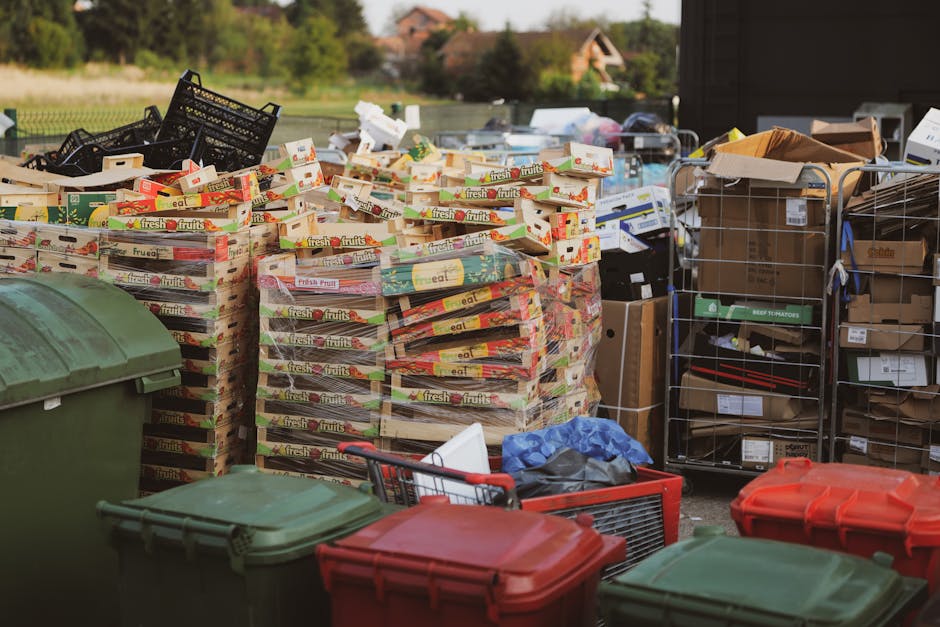
How to get a fixed price rubbish collection quote for a full property clearout

If you are staring at a house full of furniture, bags, old appliances, loft clutter, and a few mystery items no one seems to remember buying, you are not alone. Getting a fixed price rubbish collection quote for a full property clearout should make the job feel simpler, not more stressful. The trick is knowing what to ask, what information to send, and how to compare quotes without falling for vague pricing that changes on the day.
In this guide, we'll walk through how fixed price rubbish removal works, what affects the quote, what to prepare before you enquire, and how to spot a fair, transparent offer. We'll also cover common mistakes, compliance basics, and a practical checklist you can use straight away. No fluff. Just the stuff that helps you get the clearout done properly.
Why getting a fixed price quote matters
A full property clearout is different from a one-off bin collection. You may be dealing with mixed waste, bulky items, multiple rooms, awkward access, or a property that has been empty for a while. That means costs can creep up quickly if the quote is not properly pinned down at the start.
A fixed price rubbish collection quote gives you clarity. You know the likely total before work begins, which is especially useful if you are clearing a home after a move, preparing a rental property, handling an estate, or dealing with a big declutter that has run away from you a bit. Let's face it, nobody enjoys hearing "that'll be extra" while a load is already halfway to the truck.
It also helps with planning. If you need to line up cleaners, decorators, estate agents, or a probate solicitor's timeline, a fixed price gives you a steadier schedule and fewer last-minute surprises. In busy areas like London, where parking, access and timing can all affect the job, having that certainty matters more than people think.
Practical takeaway: the best quote is not always the lowest quote. It is the one that clearly explains what is included, what might change, and how the crew will handle awkward items or additional waste if it turns up.
How fixed price rubbish collection for a full property clearout works
Most reputable waste removal companies will build a fixed price around the size of the load, the type of waste, the access conditions, and the amount of labour required. For a full property clearout, the quote may be based on photographs, a short description, a video walkthrough, or an on-site visit if the job is unusually large or complex.
The process is usually straightforward, though the details matter. You send the company an overview of the property and the waste. They assess the likely volume and complexity. Then they provide a price that should cover the agreed scope. If the quote is truly fixed, it should not shift unless the job changes materially from what you described. That little distinction is important.
For example, a two-bedroom flat clearance with accessible parking and standard household items is easier to quote than a large house clearance with a loft, basement, garden waste, and several heavy furniture items. Same principle, but not the same workload. And yes, a three-seater sofa on the second floor without a lift is a different conversation from a few bags in the hallway.
If you are comparing providers, have a look at their pricing and quotes information as a starting point, then ask what is included in the price. A proper fixed quote should be easy to understand, even if the property itself is a bit of a chaos zone.
Key benefits and practical advantages
There are several reasons people prefer fixed pricing for a property clearout.
- Budget control: You know where you stand before anyone lifts a bag.
- Less stress: No awkward haggling at the kerbside.
- Faster decisions: You can approve the job and move on with the rest of the day.
- Better for planning: Especially useful if you need the property ready for sale, letting, or refurbishment.
- Clearer accountability: The scope is usually better defined, which reduces misunderstandings.
There is also a subtle but important practical benefit: fixed quotes encourage better preparation. When both sides understand the load, the access, and the items involved, the collection usually runs more smoothly. Fewer delays, fewer surprises, fewer "oh, we forgot about the shed" moments.
For bigger clearouts, this can also improve recycling outcomes. A company that knows what it is collecting can plan space in the vehicle and route items for reuse, recycling, or disposal more efficiently. If sustainability matters to you, that is worth asking about. You can read more about a business's general approach to recycling and sustainability if you want to see how they think about waste beyond the quick pickup.
Who this is for and when it makes sense
Fixed price rubbish collection is a good fit for people who want certainty and speed. That includes homeowners, landlords, tenants moving out, letting agents, executors managing an estate, builders finishing a renovation, and anyone tackling a "this room has become a storage unit" situation.
It often makes the most sense when:
- you are clearing multiple rooms at once
- the waste includes bulky items like sofas, mattresses, or wardrobes
- you need the property emptied quickly
- the item mix is fairly clear and can be described in advance
- you want to avoid hourly labour costs or open-ended loading charges
It may be less suitable if the property is packed with unknown contents, access is highly restricted, or the waste type is hard to classify before an inspection. In those cases, a site visit or a carefully worded estimate may be more realistic. Truth be told, not every job is tidy enough for a neat fixed price from a few photos.
If your clearout is mainly household furniture, a service such as house clearance or home clearance may be a better match than a generic rubbish pickup. If it is a single room, maybe a loft, garage, or flat, those focused services can also help you describe the job more accurately.
Step-by-step guidance
1. Sort the property into clear waste categories
Before requesting a quote, walk through the property room by room and separate items into broad groups: furniture, general household waste, electricals, garden waste, builders waste, and anything that might need special handling. You do not need to catalogue every spoon, thankfully, but the clearer the picture, the more accurate the quote.
2. Measure the volume as best you can
Volume is often the biggest pricing factor. Some people think in bins, some in van loads, some in rooms. Use whatever makes the most sense, but be consistent. If a company asks for photos, take them from a doorway and step back enough to show the full extent of the room. A close-up of one bag does not tell the story.
3. Note access details honestly
Say whether there are stairs, narrow hallways, no lift, permit-only parking, or long walks from the vehicle to the property. These things can affect labour time and vehicle positioning. A quote can only be truly fixed if the job conditions are properly described.
4. Include bulky or awkward items
Large items need special attention. Sofas, mattresses, fridges, wardrobes, and beds are common in full clearouts. If you are removing items like these, mention them specifically. For example, a standard furniture load and a mixed bulky waste load are not the same thing. You can check related services like furniture clearance, mattress collection, sofa removal, or white goods recycle if those items make up a big part of the job.
5. Ask exactly what the fixed price includes
This is the bit people sometimes skip, and then regret later. Ask whether the quote includes labour, loading, transport, disposal, recycling, VAT if applicable, and any parking or access costs. If something is excluded, get that in writing or at least clearly stated before the booking is confirmed.
6. Compare like for like
Two quotes that look similar on price may be very different in scope. One may include two workers, the other one worker. One may include attic access, the other may not. One may assume ground-floor loading, the other may not. Compare the details, not just the number on the page.
7. Confirm the booking and keep the scope stable
Once you accept a fixed quote, try not to change the job unless you need to. If extra items turn up on the day, tell the company as soon as possible. A decent provider will explain whether the original price still stands or whether the change affects the cost. That conversation is much easier before the van arrives than after.
Expert tips for better results
In our experience, the best quotes come from the customers who are slightly over-prepared, not the ones who try to sound vague and hope for the best. A few simple habits make a real difference.
- Send photos in daylight: You can see item sizes and room layout properly. Evening flash photos often make everything look smaller or more confusing than it is.
- Show all access points: Front path, rear gate, alley, communal hallway, parking bay - it all matters.
- Be clear about deadlines: If you need the property cleared before handover, say so early.
- Ask about recycling: Not every item should go straight to disposal. Many providers sort reusable or recyclable materials.
- Keep one contact person responsible: For estate or landlord jobs, this avoids mixed messages. Honestly, this alone saves headaches.
A helpful trick is to write a short inventory by room: "living room - sofa, armchair, TV unit, boxes; kitchen - small appliances, broken chair, bin bags; loft - mixed household clutter." It sounds simple because it is simple, and that is exactly why it works.
Also, if you have a big property or a long-term clutter build-up, a provider offering broader waste clearance or rubbish removal may be able to structure the quote more accurately than a one-item collection page ever could.
Common mistakes to avoid
Most quoting problems are caused by incomplete information, not bad intentions. Still, they can create real friction on the day.
- Hiding the awkward bits: If there is a loft ladder, cellar, or a heavy sideboard wedged behind a door, say so.
- Assuming all waste is the same: Mixed waste, electrical items, green waste, and bulky furniture can be priced differently.
- Not checking access and parking: A job in central London is rarely the same as one in a quiet suburban cul-de-sac.
- Forgetting what is still in cupboards or sheds: Full property clearouts often reveal more than people expect. You know how it goes.
- Accepting a quote without scope detail: A low price with no explanation is not much of a bargain if it changes later.
Another common issue is leaving things until the last minute. A rushed quote request tends to be messy, and a messy brief leads to a wobbly estimate. If you can, give the company a clean, honest snapshot of the property and its contents. It makes the process smoother for everyone.
Tools, resources and recommendations
You do not need fancy tools to get a good fixed price quote, but a few practical things help.
- Smartphone camera: Take wide-angle photos of each room and any bulky items.
- Notes app or checklist: Jot down room contents and access issues while you walk through the property.
- Rough room measurements: Even approximate dimensions can help when a property is densely packed.
- Calendar or timeline: Useful if the property needs to be cleared before keys are handed over.
When choosing a provider, it is sensible to look beyond the headline promise. Check whether they explain who they are, how they handle safety, and whether their process is transparent. Pages such as insurance and safety, health and safety policy, and payment and security can help reassure you that the business takes the work seriously.
If you are dealing with a specific type of waste, use the most relevant service page to frame the enquiry. For example, garage clearance, loft clearance, garden clearance, or builders waste clearance all suggest different loading patterns and waste types. That makes the quote sharper, which is exactly what you want.
Law, compliance, standards and best practice
For rubbish collection and property clearouts in the UK, the main thing to remember is that waste should be handled by a legitimate, responsible provider. You do not need to become a legal expert, but you do need to be a careful customer.
Best practice usually includes:
- using a company that can explain how waste is transported and disposed of
- making sure you understand your own duty to pass waste to a responsible collector
- keeping records or receipts for the job, especially for landlord, business, or estate matters
- checking that the company's pricing and booking terms are clear before the collection
If the property contains fridges, mattresses, upholstered furniture, or electrical equipment, extra care may be needed because these items often have specific handling or processing requirements. That does not mean they are difficult in principle, just that they should not be treated casually.
For this reason, it is sensible to read a provider's policies and standards pages. A page like terms and conditions can clarify what happens if the job changes, while complaints procedure shows whether the business has a proper process if something goes wrong. Not glamorous, perhaps, but useful. Very useful.
If you want a broader sense of how the business handles responsible waste transfer, you can also review content on what licensed waste carriers must do and your duty of care explained. Those articles are especially helpful if you are arranging a clearance on behalf of someone else.
Options, methods, or comparison table
If you are deciding how to clear a full property, there are usually three routes: fixed-price rubbish collection, council collection options, or doing the sorting and removal yourself. Each has a place.
| Option | Best for | Pros | Trade-offs |
|---|---|---|---|
| Fixed price rubbish collection | House clearouts, bulky mixed waste, urgent jobs | Clear cost, fast booking, labour included | Needs accurate description up front |
| Council collection | Smaller localised item removal | Can suit simple single-item jobs | May be slower, less flexible, and not ideal for full clearouts |
| DIY removal | Small loads and people with transport access | Full control, possible cost saving on tiny jobs | Time, effort, vehicle limits, disposal logistics |
For many full property clearouts, a fixed-price collection is the most practical balance of speed and certainty. If the job is tiny, council options might do the trick. If it is huge or involves renovation debris, something like bulk waste collection or bulky waste collection may be more suitable depending on the item mix.
There is no universal winner. The best choice depends on the size of the property, how quickly it needs to be cleared, and how much lifting you want to avoid. To be fair, most people just want it gone without a fuss.
Case study or real-world example
Imagine a typical two-bedroom terraced house in London that needs to be cleared before sale. The rooms contain a sofa, two mattresses, a wardrobe, assorted bags of mixed household clutter, an old fridge in the kitchen, and a garage with broken garden items and cardboard. The owner wants the property empty within two days so cleaners and an estate agent can follow.
In a case like this, a good quote request would include:
- photos of each room in daylight
- details of stairs and narrow access to the rear garden
- mention of the fridge and mattresses
- notes about parking restrictions outside the property
- confirmation that all items are to be removed, not sorted on site by the client
A waste removal company would then estimate the labour, vehicle space, and disposal needs more accurately. If the description is good, the fixed price is more likely to stay fixed. If the owner only said "some rubbish in the house", the result would probably be a fuzzy estimate and a longer email chain. Nobody needs that.
We've seen this play out many times: the smoothest clearouts are usually the ones where the customer gives honest detail, even if the detail feels a little messy. "There's quite a lot in the loft and a heavy desk in the front room" is far more useful than "a few bits." One line can save a lot of back-and-forth.
Practical checklist
Use this before requesting your quote. It keeps everything simple.
- Walk through every room, loft, cellar, garage, shed, and outside area
- List bulky items separately
- Take clear photos in natural light
- Note stairs, lifts, parking, permits, and narrow entrances
- Check whether any items need special handling
- Decide your deadline for the clearout
- Ask what the fixed price includes
- Confirm whether recycling or reuse is part of the service
- Keep one person as the main point of contact
- Save the quote details before accepting
Quick summary box: If you want a proper fixed price, give a proper description. Photos, access notes, bulky item details, and timing requirements will usually lead to a much more reliable quote than a short message ever could.
Conclusion
Getting a fixed price rubbish collection quote for a full property clearout is mainly about clarity. When you describe the property well, ask the right questions, and compare the scope rather than just the headline number, you give yourself a far better chance of a smooth, predictable job.
Whether you are clearing a family home, a rental property, a flat, a garage, or a house that has simply accumulated too much over time, a fixed quote can take a lot of the pressure off. It is practical, it is transparent, and it helps you make decisions without second-guessing every step.
If you are ready to move forward, keep your photos, access notes, and room-by-room list handy, then choose a provider that explains its process clearly. A little prep now can save a lot of stress later. And once the clutter is gone, the place always feels a bit lighter, almost like you can hear the rooms again.
Get a free quote today and see how much you can save.
Frequently Asked Questions
What information do I need for a fixed price rubbish collection quote?
You usually need photos of the waste, a rough list of items, access details, and the property type. The more accurate the description, the more reliable the fixed price will be.
Can I get a fixed price without an on-site visit?
Yes, many providers can quote from photos or a video walkthrough if the job is straightforward. For larger or more awkward clearouts, an inspection may still be the safest way to price it fairly.
What affects the price of a full property clearout?
Volume, item type, access, labour time, parking difficulty, and whether there are any special items such as fridges, mattresses, or heavy furniture can all influence the quote.
Is a fixed price better than an hourly rate?
For many clearouts, yes. A fixed price gives you certainty and helps avoid unexpected labour costs. Hourly pricing can suit uncertain jobs, but it is less predictable.
What if I find more rubbish on the day?
Tell the company before collection if you can. A genuine fixed quote usually covers the agreed scope, so extra items may need a revised price if the job changes significantly.
Do council collections work for full property clearouts?
Usually not very well. Council collection options are often more suitable for smaller or single-item jobs. For a whole property, a dedicated clearance service is normally more practical.
Should I sort items before asking for a quote?
Some sorting helps a lot. You do not need to do a full declutter first, but separating bulky items, electricals, and general waste makes the quote more accurate and the collection easier.
How can I tell if a quote is genuinely fixed?
It should state what is included, what could change it, and whether labour, transport, and disposal are part of the price. If the explanation is vague, ask for more detail before booking.
What is the best way to show the size of a property clearout?
Use wide photos from the doorway or corner of each room, and add a simple room-by-room list. That gives a much better picture than a couple of close-up shots.
Are bulky items like sofas and mattresses included in a clearout quote?
They can be, but they should be mentioned specifically. Bulky items often need more labour and space, so they may affect the overall price if they are not included in the original description.
Can I book same-day collection with a fixed quote?
Sometimes, yes, if the job is clear and the schedule allows it. Same-day jobs are more likely when the access is straightforward and the waste has been described properly.
What should I check before accepting a quote?
Check the scope, exclusions, payment terms, access assumptions, and whether recycling or disposal is included. A few minutes of checking now can prevent a muddle later.